 Prompt Advisers
Field Notes · AI Tutorials
How to Uncensor Any AI Model With One Skill
Uncensor any AI model on your own Mac with my free /unlock skill. See the Qwen demo, the exact prompts, and the risks. Join the community.
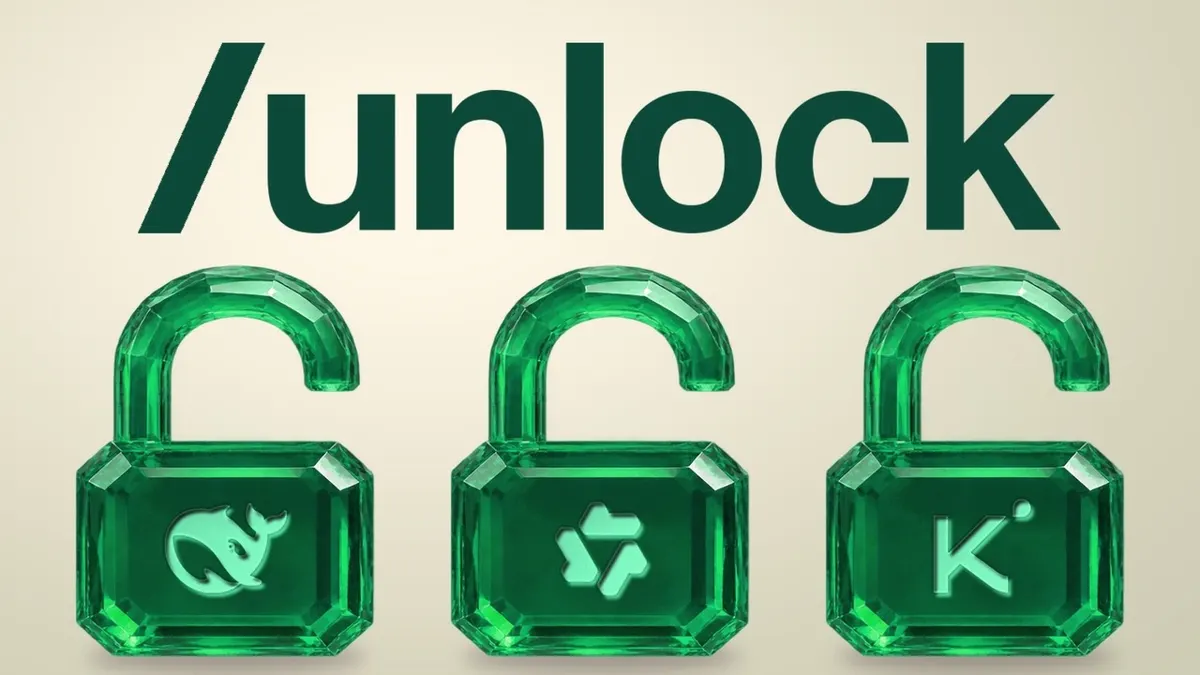
If you want to uncensor any AI model, the trick is to edit its weights on your own computer, not to trick it with a clever prompt. I packed that process into a skill called /unlock, and I used it to get a Qwen model on my Mac to answer a question it had flatly refused.
TL;DR
- A local Qwen model refused a Tiananmen Square versus Berlin Wall history question, and one /unlock prompt later a copy of it answered the same question.
- Refusals are trained into the weights you download, so a copy with those weights adjusted behaves differently from the original.
- The skill is built on tooling from the popular open-source Heretic repo, simplified so non-experts can run it.
- Always keep the original model as a control, because uncensoring can degrade quality if it changes too many weights.
How Do You Uncensor Any AI Model Step by Step?
You send a coding agent the /unlock skill, a model download link, and examples of prompts the model refused. The agent does the testing for you.
I ran this on Qwen, an open-weight model, inside a DeepSeek harness on my Mac. Open-weight means you can download the model and run it on your computer. A harness is just a workspace that lets the model use tools, much like the Claude or Codex desktop apps.
Here is the prompt shape I used in Codex at 4:57. Frontier models are usually faster at this job than a local model editing another local model, and Codex is more relaxed about it than Claude.
- Type /unlock and say you want to uncensor a copy of a model and use it in your harness.
- Paste the exact download link so the agent does not grab a random, unsafe file.
- Ask it to check your computer can run the model and to download the original as a control.
- Add examples of prompts the model rejected. I call this the most important part.
- Ask the agent to test both versions and look for any drop in quality.
What Happened When I Asked Qwen About Tiananmen Square?
The original Qwen refused, and the uncensored copy answered. The prompt was a history class question asking for one similarity and two differences between the 1989 Tiananmen Square protests and the fall of the Berlin Wall, kept factual and non-graphic.
Most Chinese models reject that kind of political question. After one /unlock run, the same question got a full answer. The same technique can change almost any behavior of an open model.
What Is Actually Happening Inside the Model?
The model refuses because refusals were trained into its weights, the same way its answers were. Both behaviors ship inside the files you download.
The skill feeds the model prompts it refused and watches for patterns in where and why the refusals happen.
Then it estimates which weights it could tweak to make refusals less likely. The goal is not to delete the weights behind the refusal. It is to reduce their influence on the answer. The tooling comes from the Heretic repo on GitHub, which also targets AI slop and sycophancy.
Can You Change Behavior Other Than Refusals?
Yes, the same method can change style, tone, and habits. My test was an AI slop problem.
I asked for a message to a customer of a scheduling app after a 90 minute outage, with no pricing or credit policy provided. The stock reply was the usual Dear X email. I then made a fresh copy of the model and told it to always ask for the relevant facts before agreeing to a claim or promising a credit.
The new copy answered with a short, bulleted message asking for more information. It still parroted back too much of the customer's message. That is why you test with several versions of the prompt, and check you did not over-index the model on one style.
Does Uncensoring Make a Model Worse?
It can, and that is the biggest risk in this whole process. Touch too many weights or change them too hard, and you uncensor and degrade the model at once.
So keep your original beside the new copy. Run a few experiments, compare replies, and confirm you got the change you wanted and nothing new you did not. An uncensored model can still refuse sometimes, and it can still give overly confident wrong answers.
Here is how the options compare.
| Approach | Effort | Best for |
|---|---|---|
| Use an existing uncensored model | Low | Trying the idea fast |
| Run /unlock yourself | Medium | Custom behavior changes |
| Work from Heretic directly | High | People who like the details |
If you only want a ready-made model, start with my picks for the best uncensored AI models or my guide on how to use uncensored AI. For the security side, see uncensored AI hack your app. For team guardrails, see our enterprise AI consulting.
Final Thoughts from Mark
A process that used to be closed off to a small group of experts is now open to anyone with a decent computer and a coding agent. Use it for the right reasons and test everything twice. The skill and a plain English guide are free through the link in the video description, and the Hugging Face docs are a good place to learn more.
Uncensor Any AI Model FAQs
Can you really uncensor any AI model?
You can uncensor most open-weight models you can download, because refusals live in the weights on your machine. You cannot do this to closed models like Claude or GPT. Results vary, and the edit can also make the model worse if it changes too much.
What does uncensored AI mean?
It means the model was changed so it is less likely to refuse your prompts. It does not mean it is always right. An uncensored model can still refuse sometimes, and it can give confident wrong answers, so check what it tells you.
What is Heretic and how does it relate to the unlock skill?
Heretic is a popular open-source GitHub repo with tools that remove censorship, cut AI slop, and reduce sycophancy. The tooling is complex for non-technical people, so I simplified a lot of it into a plug and play skill called /unlock.
Does uncensoring a model make it worse?
It can. If the edit touches too many weights or changes them too much, you degrade the model while uncensoring it. Keep your original copy as a control, run side by side tests, and compare replies before you trust the new version.
Can I change AI behavior other than refusals?
Yes. The same technique changes writing style too. I made a copy of a model that asks for the relevant facts before promising a customer credit, and it switched from a Dear X email to a short bulleted reply.
By Mark Kashef
All field notes