 Prompt Advisers
Field Notes · Claude Code
The 5 Layers of Every Agentic OS, Explained
An agentic OS has five layers, from identity to tools, each rotting at its own pace. Here is the mental model I use to build and maintain every one.
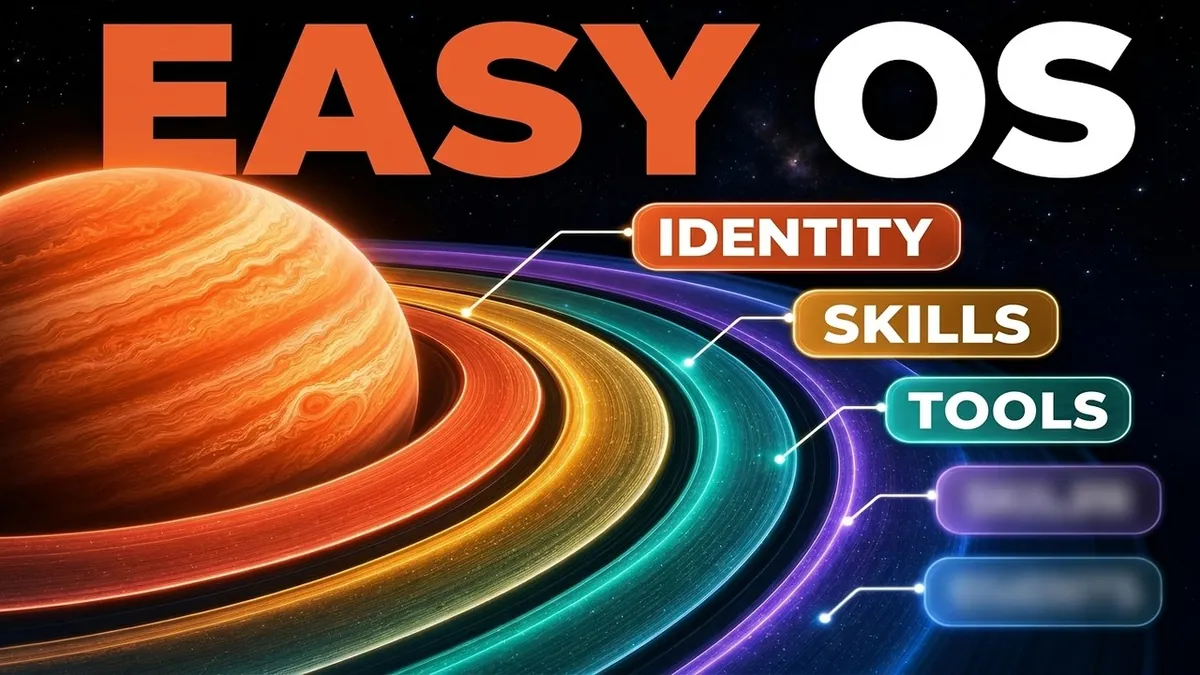
Building an agentic OS is the most overcomplicated idea in AI right now, and it does not have to be. Five layers, one mental model, and you stop drowning in plumbing.
How an Agentic OS Actually Works
Most people start with the dashboard, the screen where everything comes together. It is worthless without the plumbing underneath, and the plumbing is the whole game.
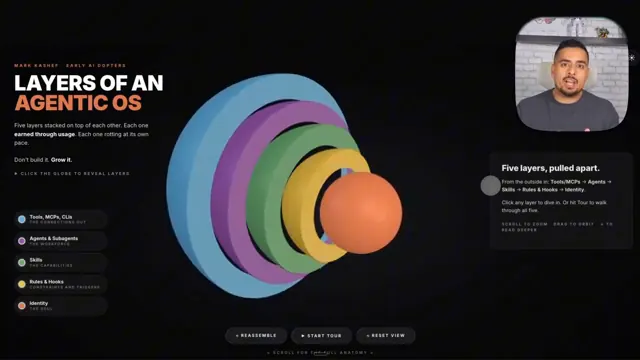
Think of the Earth. A stable core, then hotter, more volatile layers out toward the surface. An agentic OS works the same way. The center is your identity, fixed and rarely touched. The outer edge is your live data, shifting with every API and model release. Name the five layers and you never get lost again.
The Five Layers, Core to Surface
Start at the center and move out.
Identity is the soul of the system. A CLAUDE.md or AGENTS.md file that sets the role, the point of view, and the way of working. I keep mine lean and use it as a pointer, a short index that says when we do this, read these files. That way any model, even an open one, knows exactly where to look.
Rules and hooks come next. A rule is a strong suggestion for how the agent should behave. A hook is deterministic. It fires on a real event, like a check that strips personal data before anything gets pushed to GitHub. You rarely start here. You add them once you hit a behavior worth containing.
Skills are repeatable workflows. Run the same process ten times in slightly different ways and it deserves to be a skill. People love building them and hate maintaining them.
Agents arrive when skills add up to a role. A skill is a verb. An agent is a role. Think like a bootstrapped founder with no cash. What is the single best first hire? Push that one agent far before you add another. An army of agents is a maintenance nightmare, not a flex.
Tools are the data layer. Databases, a CRM, QuickBooks, meeting transcripts, reached through APIs, MCPs, and CLIs. This is where the system stops being a smart notepad and touches real software.
Put technical and non-technical people in one room and it clicks fast. That is most of what we do in our AI workshops and bootcamps.
Rot Rate, Why Your Agentic OS Expires
Here is the part almost every guide skips. Every layer has a rot rate. That is the pace at which its context goes stale and starts poisoning your results.
Build the perfect OS today and parts are obsolete in ninety days. Identity rots slowly. Agents rot fastest, because each new model shifts how you prompt. Tools rot when a provider deprecates an API. Skills sit in the middle.
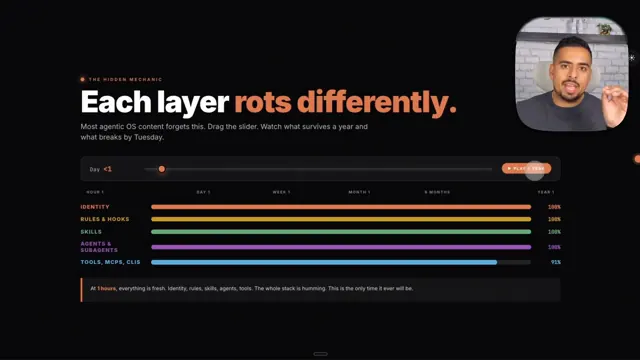
The fix is boring and it works. Write a rot file that records how fast each layer ages, then run a weekly routine that prunes and updates it. Do it right after you build, not months later. In our enterprise AI consulting, the missing maintenance loop is the first thing we look for.
What an Agentic OS Looks Like in Practice
Let me make it tangible. I run a finance command center that works like a fractional CFO. Number each folder after its layer as training wheels. Identity in the CLAUDE.md, an always file and a never file for rules, hooks that guard client data, a monthly-close skill, one portfolio-strategist agent, and a rot file tracking all of it.
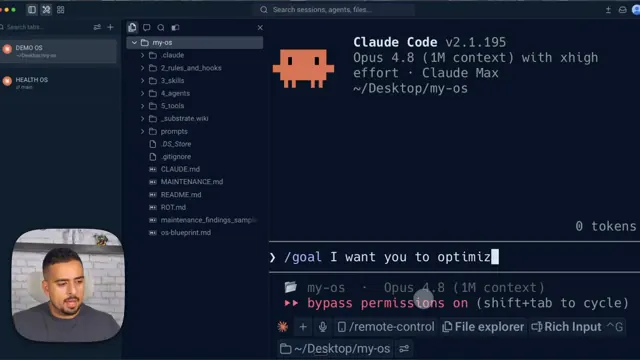
I run about twenty of these now, from finance to a personal health coach. You can stand up eighty percent in a weekend, then spend weeks making it move the needle. No single blueprint applies to everyone. My OS for tax or health will never match yours. More of these breakdowns land on Mark Kashef's YouTube channel every week.
Mark's Final Thoughts
This is not rocket science. It is an art with the guardrails of science. Know what you need, build the asset, then keep it sharp. The moment you build an operating system you are on the hook to maintain it, like sharpening a sword. Start with one command center this weekend, get it to eighty percent, and let real use guide the rest.
Agentic OS FAQs
What is an agentic OS?
An agentic OS is the full set of context and plumbing that turns a language model into a real expert for one job. It is not a dashboard. It is five layers working together, identity, rules and hooks, skills, agents, and tools. The dashboard is only the surface on top.
What are the five layers of an agentic OS?
Identity is the soul or CLAUDE.md file. Rules and hooks are your guardrails and deterministic triggers. Skills are repeatable workflows. Agents are roles built on those skills. Tools are the live data layer of APIs, MCPs, and CLIs. They stack from a stable core out to a fast-changing surface.
What is rot rate in an agentic OS?
Rot rate is how fast a layer goes out of date. Identity changes slowly. Agents rot fastest, because every new model shifts how you prompt. Tools rot when APIs get deprecated. You plan for it with a rot file and a weekly pruning routine.
How long does it take to build an agentic OS?
You can build about eighty percent in a weekend. The rest is weeks to a couple of months of tuning on real edge cases. There is no single blueprint. Your system for finance or health will look different from mine, and that is the point.
Do I need to know how to code to build an agentic OS?
No. You describe the job in plain language and let Claude Code build the structure. Numbering your folders by layer as training wheels helps at the start. The real skill is knowing what each layer is for, not writing code. That is what we teach non-technical people to do in a weekend.
By Mark Kashef
All field notes