Claude Apps Lock-In: How to Own Your App Instead
Claude apps lock-in is real. Learn how to rebuild any Claude app as a web app you own, host anywhere, and use offline. Grab my free prompts.
Claude apps lock-in happens when you build a tool as a Claude artifact, install it as an app, and quietly tie your daily workflow to one provider. The fix is simple. Use the Claude app as a prototype, then ask Claude to rebuild it as a standalone web app you host yourself.
TL;DR
- A Claude app is a desktop shortcut to an artifact, so if the artifact is taken down, Claude suggests uninstalling the app.
- Claude apps stop working the moment your Wi-Fi goes off, and each uploaded file is capped at around 20 megabytes.
- You can rebuild any Claude app as a progressive web app with a database and a host, using connectors for Supabase, Neon, Vercel and more.
- Composio.dev has a free hobby plan that connects your email, calendar and over 2,000 apps without Zapier or n8n.
How Claude Apps Lock-In Actually Works
Claude apps lock you in because the installed app is just a wrapper around an artifact that lives inside Claude. That is why I call it a trap, even though the first run feels magical.
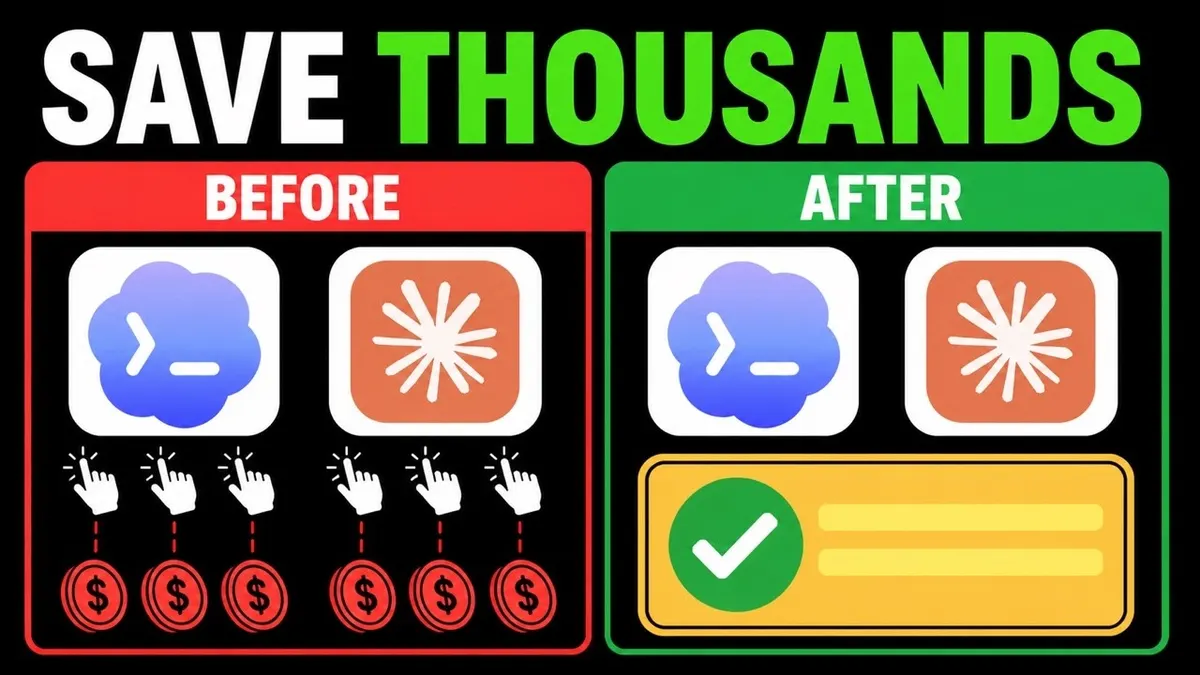
I built the same app twice. The one on the left I own, so I can cancel my Claude subscription tomorrow and swap providers. The one on the right I rent forever. If Anthropic changes prices across the board, all of that software is held hostage.
The app is called Dreamlight, a focus app full of binaural beats that replaces a $19 a month subscription I paid for four years.
Early AI-dopters is where 1,000+ members swap prompts like the ones in this post.
What Are the Catches of a Claude App?
The Claude version has four catches that barely anyone talks about. You can send one prompt, mention artifact, and get a hosted one-shot clone. Then you click Install as app and it sits in your dock like any desktop app.
Here is what I found:
- Usage drain. You use these apps daily, so you keep pulling on your usage without noticing. That becomes a silent killer for your context window and budget.
- No network, no app. I turned off my Wi-Fi and nothing worked.
- File size limits. Claude caps each uploaded file at around 20 megabytes, so I could not create a one-shot carbon copy of my existing app.
I also think an AI rug pull is coming, when these companies stop subsidizing your usage by thousands of dollars.
How Do You Build an App You Own?
You build an app you own by keeping the code and files somewhere you control, then adding your own connectors. My music came from Python only, no audio model. Claude wrote it wave by wave and stitched a one hour track together. I used Higgsfield for the visuals, and you can read my take on a Higgsfield alternative too.
To add a new mood called Build, I connected Higgsfield, attached the Claude mascot as a character reference, and asked for a 20 second preview plus a looping animation. Twenty minutes later I had the clips, covers and the full hour track, with no size limits in my way.
Does a Progressive Web App Replace a Claude App?
Yes, a progressive web app gives you the same experience as a Claude app, and you control all of it. You need a place to host it and a database to keep the data.
Use the connectors. For the database, pick Supabase, Neon or Convex. For hosting, pick Vercel, Hostinger or Railway. Then use a magic word. Instead of asking for a Claude app, ask for a progressive web app, or PWA. It has existed for more than 10 years and makes your app mobile friendly.
Want a desktop version? Ask for Electron. The Claude desktop app is written in Electron too. If you want your team to build this way, look at our AI training for teams.
| Option | You own it | Works offline | Best for |
|---|---|---|---|
| Claude app | No | No | Prototypes and a week-long tool |
| PWA on Vercel | Yes | Yes, if built for it | Daily apps on web and phone |
| Electron desktop app | Yes | Yes | Desktop-first tools |
How Do You Connect Your Calendar and Email?
Use Composio, a free service that hooks up your email, calendar and over 2,000 apps. It is not Zapier or n8n. The hobby plan is enough, so you never need to upgrade.
In my version I asked Claude to connect Composio to Dreamlight. It syncs with my calendar, so 10 minutes after a meeting ends, my deep work playlist starts. It does not depend on Claude at all.
Here is the prompt I send after I have a draft artifact: rebuild this Claude app as a web app I own, save its data in a local file or Supabase, deploy with the Vercel connector, use Composio.dev to connect Google Calendar, then tell me exactly what to click. If your company needs help here, try our enterprise AI consulting is for.
Final Thoughts from Mark
Use Claude apps to test an idea fast. Then, once you rely on something every day, take the few steps to own it. You get the same experience, plus the freedom to switch providers and work offline. The prompts, the app and my tracks are all free in the care package.
Claude Apps Lock-In FAQs
What is Claude apps lock-in?
Claude apps lock-in is the dependency you create when an app lives as a Claude artifact. The installed app stays tied to that artifact, needs a network connection, and runs on your Claude usage. If the artifact is removed, Claude suggests uninstalling the app completely.
Can I use a Claude app offline?
No. When I turned off my Wi-Fi, the Claude app version of my project stopped working, along with every feature inside it. A standalone web app you host yourself can be built to work offline, and that was one of my main reasons for rebuilding mine.
How do I turn a Claude app into a real app?
Ask Claude to rebuild the artifact as a web app you own. Tell it where to save data, such as a local file or Supabase, and where to deploy, such as Vercel. Then ask it to list exactly what you need to click to finish setup.
What is a PWA and why use one instead of a Claude app?
A progressive web app is a website that installs like an app on your phone or desktop. The idea is more than 10 years old. Unlike a Claude app, you host it yourself, so you control the code, the data, and the provider behind it.
Are Claude apps still worth using?
Yes, for prototypes. A Claude app is perfect for a quick tool you will use for a week, or for showing your team what is possible. Once you rely on it every day, move it to a stack you own.